
The Ultimate 7 Days Hidden Gem Japan Itinerary
If you’ve already done the Tokyo-Kyoto-Osaka circuit, or simply want to skip the crowds entirely, Japan has no shortage of underrated destinations that are just as beautiful — without the tour groups. This one-week itinerary takes you through quieter cities, scenic countryside, and coastal towns that most first-time visitors never see, but that locals and repeat travelers quietly love. Here’s how to spend seven days off the beaten path in Japan.
Days 1–2: Toyama
Start in Toyama, a coastal city on the Sea of Japan that’s often skipped entirely by international travelers despite being easy to reach via the Hokuriku Shinkansen. Spend your first day exploring Toyama Castle Park, the striking Toyama Glass Art Museum designed by architect Kengo Kuma, and the Environmental Sculpture Garden surrounding it, filled with contemporary glass and outdoor art.
On day two, take a short trip to the Amaharashi Coast, famous for views of snow-capped mountains rising directly behind the sea, then head to Toyama’s Iwase district in the evening, a beautifully preserved Edo-era port town lined with sake breweries and now home to quiet cafés and craft shops. If it’s spring, don’t miss the seasonal firefly squid, a Toyama Bay specialty served raw, fried, or simmered depending on the restaurant.
Days 3–4: Takayama and Shirakawa-go
Take a scenic bus or train into the mountains to Takayama, a beautifully preserved Edo-era town in the Japanese Alps. Its old town, Sanmachi Suji, is lined with wooden merchant houses, sake breweries offering tastings, and local craft shops, with almost none of the crowds you’d find in Kyoto’s historic districts.
From Takayama, take a short bus ride to Shirakawa-go, a UNESCO World Heritage village famous for its gassho-zukuri farmhouses with steep thatched roofs built to withstand heavy snow. Visiting as a half-day trip lets you wander the village and enjoy mountain views without needing to stay overnight, though a stay in a traditional farmhouse is a memorable option if you have extra time. Return to Takayama for the night and try Hida beef, a local specialty as prized as the more famous Kobe beef.
Day 5: Toyama Route to Kinosaki Onsen
Head south to Kinosaki Onsen, a charming hot spring town on the Sea of Japan coast that feels like stepping back in time. Unlike larger onsen resorts, Kinosaki is built around a willow-lined canal, and visitors wander the streets in yukata (casual cotton kimono), hopping between seven public bathhouses, each with its own character and history.
Spend the afternoon soaking, strolling the canal at sunset, and enjoying a kaiseki dinner featuring seasonal, local ingredients — in winter, this often means fresh crab from the nearby coast. It’s one of the most atmospheric and relaxing towns in Japan, and remains largely unknown to international travelers.
Days 6–7: Naoshima Art Island
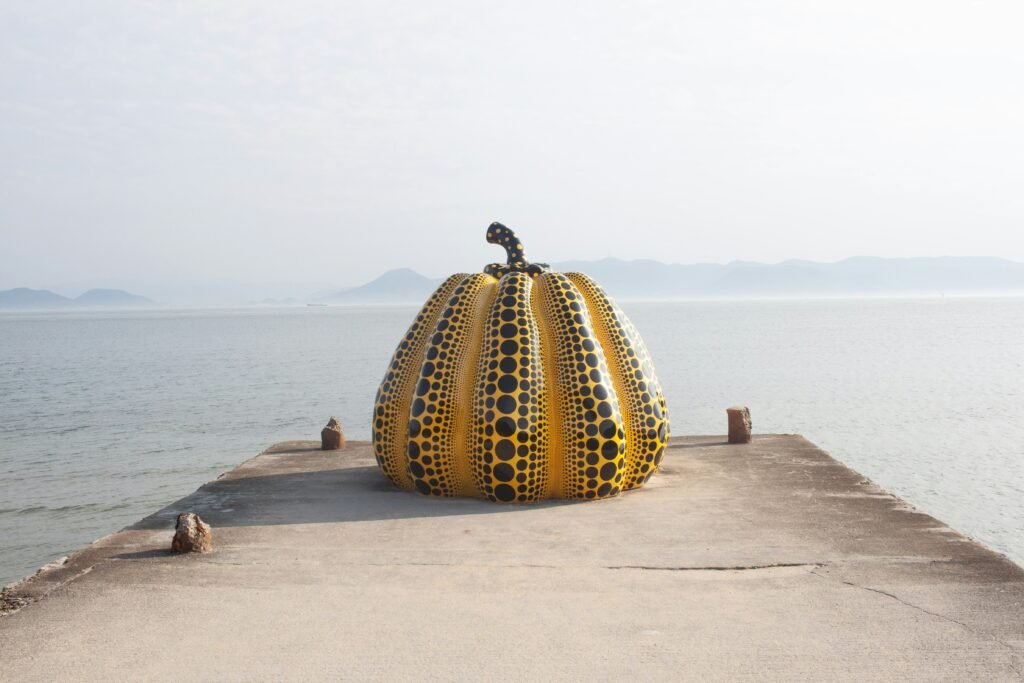
End your trip with something completely different: Naoshima, a small island in the Seto Inland Sea that has transformed into one of the world’s most unique contemporary art destinations. The island is home to the Chichu Art Museum, built largely underground to preserve the surrounding landscape, along with outdoor installations like Yayoi Kusama’s iconic yellow pumpkin sculpture overlooking the sea.
Rent a bicycle to explore at your own pace, visiting the Benesse House Museum and wandering through the Art House Project, where entire abandoned buildings in a local village have been transformed into art installations. Naoshima moves at a slow, contemplative pace, making it a perfect, low-key way to close out a trip built around avoiding crowds. Spend your last morning island-hopping to nearby Teshima if time allows, before heading to Okayama for onward travel.
Travel Tips for Exploring Japan’s Hidden Gems
Rent a car for parts of this route. While Japan’s train system is excellent, some of these destinations — particularly the mountain roads around Takayama and Shirakawa-go — are far more flexible and scenic by car. Just note that many rural roads require an International Driving Permit.
Book rural accommodation earlier than you’d expect. Smaller towns like Kinosaki and Shirakawa-go often have limited lodging, and the best traditional ryokan or farmhouses can sell out weeks in advance, even though the towns themselves are quiet.
Carry cash. Smaller towns and traditional inns are far less likely to accept credit cards than cities like Tokyo or Osaka. ATMs at post offices and convenience stores like 7-Eleven reliably accept foreign cards.
Learn a few basic Japanese phrases. English is far less common in rural areas, and a little effort goes a long way. Simple phrases for ordering food, asking for directions, or saying thank you (arigatou gozaimasu) are always appreciated.
Check regional transport passes. Rather than a nationwide JR Pass, look into regional passes like the JR West or Takayama-Hokuriku Area Pass, which can be more cost-effective for itineraries focused on one region.
Pack for onsen towns. If you’re visiting Kinosaki or any hot spring town, bring or rent a yukata-friendly mindset — most ryokan provide one, but comfortable, easy-to-remove layers make the whole experience smoother.
Travel slower than you think you need to. The appeal of these hidden gems is largely in their pace. Resist the urge to pack in extra stops, and allow time to simply wander, since much of the charm in these towns comes from unplanned moments.
This route trades big-name landmarks for quiet gardens, mountain villages, atmospheric onsen streets, and world-class art in an unexpected setting — proof that some of Japan’s most memorable experiences are found well outside the usual tourist trail.
Looking for more off-the-beaten-path travel inspiration? Save this itinerary and follow along for more hidden gem guides!